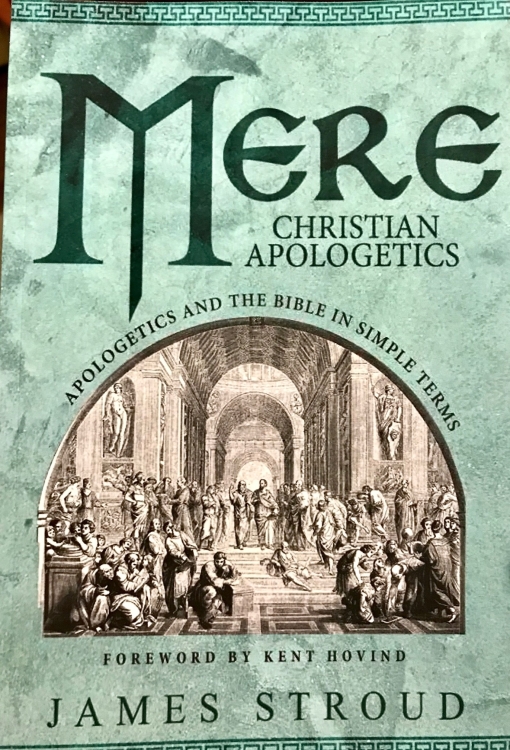
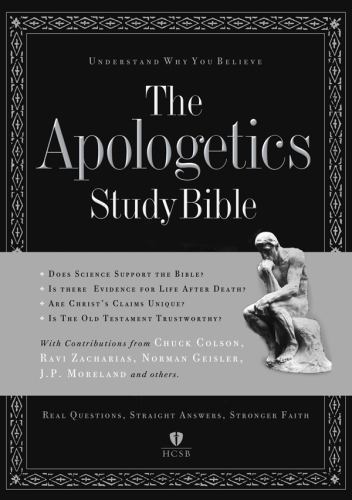
It is my extreme hope, that this site will do a few things:
1) That it will provide skeptics, agnostics, scoffers, those who express "what difference does any of it really make?", etc., with concrete facts to show them that there is obviously a Designer to us and the universe around us; and this in itself, gives an entire new and *uplifting meaning to our lives.
2) To help show that the God of the Hebrew Bible, (Old & New Testament), is this God, and that we should do our utmost to immitate the example given to us by Christ Jesus. **While church denominations very unlikely have it all 100% accurate, we should not judge them too harshly. There will always be people that do bad things, but they say they are doing it in the name of "Christianity;" they are human, and are therefore subject to human error, and we therefore should not avoid church attendance simply because we see these errors. Church is an important part of worship, study, reflection, fellowship, and in doing God's work; find a church that adheres to Biblical doctrine, and then pray, learn, and grow.
3) Lastly, I hope this site helps Christians realize that we all have an obligation to do God's work, and in so doing, we should be able to answer someone that asks: "What about science, philosophy; other religions - islam, hinduism, archaeological evidence, etc.," and tie this in of course with our Faith; as 1 Peter 3:15 says: "Always be prepared to give an answer to everyone who asks you to give the reason for the hope that you have." Agnosticism/skepticism/secularism/materialism - account for just over ONE BILLION person throughout the world, and these individuals need to hear about this "Hope and Faith." It is my sincere prayer and hope, that this site will give those in search of answers, a basic reasoning that if there is one-millionth of a chance that the God of the Bible is true, then there is nothing more important for us than to accept/dedicate ourselves to this God; and that it will assist in helping others to reach out to those in need of this same "Hope and Faith."
Christ + Discipleship + 21st Century =
This site is dedicated to the corner of the Triangle known as "Apologetics."
It is my heart-felt belief that these 3 components together are of crucial importance to Christ-centered true Discipleship - based on "truth/veritas."
Unlike various other world views, (both religious and secular/materialistic), Christ did not just show the "truth" He said "I am the 'Truth.'"
It is my sincere hope that these 3 websites will help you better see and implement this "truth" Christ talks about. (Each website has a 100% Free start-up pack for each pillar described above)
1) "Remember the prisoners, as though in prison with them, and those who are ill-treated, since you yourselves also are in the body." - Hebrews 13:3 (Persecution)
2) "Always being ready to make a defense to everyone who asks you to give an account for the hope that is in you, yet with gentleness and reverence." - 1 Peter 3:15 (Apologetics)
3) "And Jesus came up and spoke to them, saying, All authority has been given to Me in heaven and on earth. Go therefore and make disciples of all the nations, baptizing them in the name of the Father and the Son and the Holy Spirit, teaching them to observe all that I commanded you; and lo, I am with you always, even to the end of the age." - Matthew 28-18-20 (Evangelism)
Only 50-59% of Americans believe "religion is important..."
“Where were you when I laid the foundations of the Earth? Tell me, if you know so much.” - JOB 38:4
Is "God" Logical?
In a "nut-shell" - When we examine the issue of moral relativity, we arrive at door or of truth. The whole issue of morality is based on the source and reality of truth. What is truth? If truth is subjective then morality is subjective. If truth is objective then there are moral absolutes. Subjective truth, truth is subject to the possessor is illogical. Objective truth, the objective correspondence of what is real, corresponding to reality. What is source for this reality, for this truth? We know we exist, and we are aware of our existence. Because we can see children being born and ourselves getting older, it is logical to conclude there is a beginning, “A Cause”, to our existence. We can also observe the same in the animal world. Animals are born and die; they too must have a starting point of existence. The necessity for a cause leads us to another “First Principle” the need for cause;
The principle of causality:Only being can cause being. Nothing does not exist, and only what exists can cause existence, since the concept of “Cause” implies an existing thing that has the power to effect another. From absolutely nothing comes absolutely nothing.[1]
Every thing that comes to be must have a cause. If you take a candle and light it, it will burn for a limited amount of time until its potential energy is burned. The heat, the candle emits is similar to the heat the sun emits. The fact that the candle’s energy source is finite demonstrates the need for cause. There was a cause for the candle and their will be an end to the candle. The heat emitted from the Sun is contingent (dependent) on the finite (limited) energy contained in the Sun.
This demonstrates the Sun is also finite, there was, a cause, for the Sun to exist. This same principle is out throughout the whole universe. The farthest galaxies emitting finite energy have a point they were turned on, “A cause” for their existence.
Sir Francis Bacon (1561-1626) the father of modern science said, “True knowledge is knowledge by causes.”[1] If the Universe is finite and had a beginning, then it would need to have a cause—if causality is a valid principle. A flaw in the causality principle would be equivalent to having a fatal crack in the foundation of science.[2] David Hume, (1711-1776) the skeptic admitted, it is absurd to deny the principle of cause.
“I never asserted so absurd a proposition as that anything might arise without a cause.”[3]
What is the Cause of the Universe?
For a finite universe to exist there needs to be a cause. This question is regardless of religion, it is a question of truth. Based on the observable universe we know there was a time when the universe as we know it did not exit. What brought the universe into existence? Did the universe always exit? Did matter, space and time one day explode into existence? Did matter always exist? These questions have pondered scientist, philosophizer and theologian.
For those who are seeking evidence for the existence of God. The creation of the universe is one of the most powerful arguments. This is the Cosmological argument for the existence of God.
The Cosmological Argument
In the cosmological discussion the first question that needs to be answered is, “Did the universe have a beginning?” What are the options?
If the universe had a beginning, then it needs a first cause.
Did the universe self-cause itself? In order to self-cause itself it would have to not exist (to cause existence) and exist (in order to be caused) at the same time. Therefore, this option is ruled out because it violates the “Law of non-contradiction”.
Did the universe always exist? As Carl Sagan believes, (“The Cosmos is all that is or ever was or ever will be”). Naturalist believe the universe either;
A. Came from nothing by nothing
B. Always existed.
Option A. is impossible, it not possible for nothing to produce something. So the option left is to accept that the universe always existed, option b.
Laws that affect the Universe:
The First Law (Law of Energy Conservation) states that energy can neither be created nor destroyed.
The Second Law (Law of Energy Decay) states that in a closed system, the amount of usable energy in the universe is decreasing.” Entropy is the level of disorder in a system.
A highly ordered system is in a low state of entropy. A disordered system is in a higher state of entropy.
Is the Cosmos running out of usable energy?
Cosmologists treat the universe as a gigantic heat engine with no external source of energy input. This means that the total amount of usable energy in the universe is fixed and is decreasing as time passes (nuclear fusion is occurring throughout the universe).[1]
This means that at some point the universe was at highly ordered state. According to the 2nd Law, the universe is expected to run out of usable energy. Roy Peacock, an expert in thermodynamics, wrote “A Brief History of Eternity” to show how discoveries in the universe along with the laws of thermodynamics show the universe is finite.He writes,
The Second Law of thermodynamics is probably the most powerful piece of legislation in the physical world. It ultimately describes every process we have ever discovered: it is the final Court of Appeal in any dispute relating to action and procedures, whether they are naturally generated or man inspired. It draws the conclusion that in our universe there is an overall reduction in order, a loss of available energy that is measured as an increase in entropy. So the available stock of order is being exhausted. Akin to the dying battery of a flashlight, useful energy is being dissipated into entropy after which none remains for use…For us to live in a universe in which the Second Law of thermodynamics holds, then, it must be a universe that has a starting point, a creation.[2]
Is there Evidence of a Finite Universe?
The Radiation Echo:
Arno Penzias and Robert Wilson, two physicists at Bell Laboratories discovered the earth is bathed in a faint glow of radiation. They were awarded the Nobel Prize in 1978. Their data found this radiation was left over from the initial explosion of the beginning of the universe, commonly referred to as the Big Bang.
In November of 1989, a satellite named COBE, (Cosmic Background Explorer) was successfully launched into space with instruments aboard capable of measuring the radiation echo left behind from the Big Bang. In April 1992, the final summation of COBE’s data was made public and hailed as unprecedented. Stephen Hawking, author of “A Brief History of Time”, called the discovery, “The most important discovery of the century, if not all time.” [3] This affirms the universe had a beginning.
The Expanding Universe
Albert Einstein’s General Theory of Relativity predicted that the universe had a beginning and is expanding in all directions. If we reversed the theory, there would be a starting point to the universe. This disturbed Einstein; his own theory demanded a starting point for the universe. Robert Jastrow, founder of NASA’s Goddard Institute for Space Studies and served for twenty years as its director wrote about Einstein’s reaction in his realization of a finite universe:
Around this time, signs of irritation began to appear among the scientists. Einstein was the first to complain. He was disturbed by the idea of a Universe that blows up, because it implied that the world had a beginning. In a letter to de Sitter—discovered in a box of old records in Leiden some years ago—Einstein wrote, “This circumstance (of the expanding Universe irritates me,” and in another letter about he expanding Universe, he said: To admit such possibilities seems senseless.”….I suppose that beginning in time annoyed Einstein because of its theological implications.[4]
Based on Einstein’s theory of general relativity, the universe is finite and expanding in all directions. Since 1919 this theory has been verified numerous experiments. Therefore, we can conclude the universe had a beginning. It is finite.
What Caused the Universe?
If the universe had beginning then it must have a cause. The Big Bang does not only involve the start of matter but also space and time. Matter, space and time are interdependent. The explosion of the universe was a highly orchestrated cosmic explosion with just the right mixture of gravity and explosive energy. John Polkinhorne, a theoretical physicist, and a colleague of Stephen Hawking, writes:
In the early expansion of the universe, there has to been a close balance between the expansive energy (driving things apart) and the force of gravity (pulling things together). If expansion dominated then matter would fly apart too rapidly for condensation into galaxies and stars to take place…(The possibility of our existence) requires a balance between the effects of expansion and contraction which at a very early epoch in the universe’s history (The Planck time) has to differ from equality by not more than 1 in 1060 . The numerate (mathematical) will marvel at such a degree of accuracy. For the non-numerate, I will borrow an illustration from Paul Davies of what that accuracy means. He points out that it is the same as aiming at a target an inch wide on the other side of the observable universe, twenty thousand million light years away, and hitting the mark.[5]
“If the existence of the cosmos as a whole needs to be explained, and if it cannot be explained by natural causes, Then we must look to the existence and action of a supernatural cause for its explanation”[6]
Since it is impossible for nothing to produce something, something must have always exited as the “First Cause” of the universe. Furthermore, this First Cause must be eternal (outside of time, since time is part of the finite universe) and powerful enough to account for the origin and existence of the universe. This Cause must be knowledgeable, powerful and eternal.
The Design Argument (Teleological)
The beginning of the universe requires a “First Cause”, because the universe has a starting point and is finite, the cause must be greater then the effect. In the same light, we know the existence of life also has a starting point. Matter is the building block of life, without matter, we cannot have life in this physical universe, as we know it. Therefore, the next question to be addressed is, “What is the origin to Life?”
Is the same “First Cause” that caused the universe to explode into existence the “First Cause” of life as well? There are two competing origin of life models; the macroevolutionary model and the design model.
The macroevolutionary model states that life was self-generated from nonliving (inorganic) matter. Once the gap from non-life to life was bridged, the first living cell began to evolve by random changes (mutations) in its genetic information system, creating new characteristics that were not in the original organism.
The design model states that non-life never produces life and that the first life forms were the direct result of super-intelligence.
How complex is a cell?
When Darwin wrote his theories of evolution in the mid-1800’s the cell was a mystery. It was not until after WW II and the discovery electron microscopy, that new sub-cellular structures were discovered. Michele J. Behe, author of Darwin’s Black Box, writes;
This level of discovery (of sub-cellular structures) began to allow biologist to approach the greatest black box of all. The question of how life works was not one Darwin or his contemporaries could answer. They knew that eyes were for seeing—but how, exactly do they see? How does the blood clot? How does the body fight disease? The complex structures revealed by the electron microscope were themselves made of smaller components. What were those components? What did they look like? How did they work?[7]
To understand the complexity of a cell, Michael Denton, illustrates if a cell magnified a 1000 million times until its 20 kilometers in diameter what would we see. He writes,
What we would then see would be an object of unparalleled complexity and adaptive design. On the surface of the cell, we would see millions of openings, like the portholes of a vast space ship, opening and closing to allow a continual stream of materials to flow in and out. If we were to enter one of these openings, we would find ourselves in a world of supreme technology and bewildering complexity. We would see endless highly organized corridors and conduits branching in every direction away from the perimeter of the cell, some leading to the central memory bank in the nucleus and others to assembly plants and processing units. The nucleus itself would be a vast spherical chamber more then a kilometer in diameter, resembling a geodesic dome inside of which we could see, all neatly stacked together in ordered arrays, and raw materials would shuttle along all the manifold conduits in a highly ordered fashion to and from various assembly plants in the outer regions of the cell… Is it really credible that random processes could have constructed a reality, the smallest element of which…a functional protein or gene—is complex beyond our own creative capacities, a reality which is the very antithesis of chance, which excels in every sense anything produced by the intelligence of man[8]
How could the first cell come into existence? Was it time, chance and matter? On the other hand, was it the result of an intelligent designer, a “First Cause” of life? Darwin wrote,
If it could be demonstrated that any complex organ existed, which could not possibly have been formed by numerous, successive, slight modifications, my theory would absolutely break down.[9]
According to Darwin’s criteria, his whole model of life falls apart. The cell is the smallest unit of matter considered alive…less than a 1/1000th of an inch in diameter.
In the center of the cell is the nucleolus composed of deoxyribo-nucleic acid (DNA), protein and ribonucleic acid (RNA). DNA combined with proteins is organized into structural units called chromosomes, which usually occur in identical pairs. The DNA molecule form the infrastructure in each chromosome and is a single, very long, highly coiled molecule subdivided into functional units called genes. A gene occupies a certain place on the chromosome and contains the coded instructions that determine the inheritance of a particular characteristic or group passed from one generation to the next. The Chromosomes contain the information needed to build an identical working cell.Cells serve two functions to provide a framework to support life and to make copies of themselves. They do this by having a communication system between the nucleolus and the rest of the cell. Inside the nucleolus is located all the information need to function, replicate and repair the cell. Only now is this incredibly complex system of cell communication becoming known.
In the same way a software program uses binary code, combining 0 and 1 to communicate programs throughout a computer system the cells uses the combination of four nitrogen-containing bases to communicate inside the cell. (Adenine (A), Thymine (T), Cytosine (C) and Guanine (G).Molecular biologists classify it as equivalent to a written language but not by analogy.
The statistical structure of any printed language ranges through letter and frequencies, diagrams, trigrams word frequencies, etc., spelling rules, grammar and so forth and therefore can be represented by a Markov process given the states of the system…..It is important to understand that we are not reasoning by analogy. The sequence hypothesis applies directly to the protein and the genetic text as well as to written language and therefore the treatment is mathematically identical.[1]
The cell has a language of its own, fully equipped with rules that govern how it communicates. This cellular communication system has been shown to have a one-to-one correspondence with our own communication systems.
The genetic code is composed of four letters (Nucleotides), which are arranged into sixty-four words of three letters each (triplets or codons). These words are organized in sequence to produce sentences (Genes). Several related sentences are strung together and perform as paragraphs (Operons). Tens of thousands of paragraphs comprise chapters (Chromosomes), and a full set of chapters contain all the necessary information for a readable book (Organism).[2]
The possibility of life coming into existence on its own requires two elements time and probability.
David Foster illustrates the problem with a deck of 52 playing cards.
Specificity is the measure of the improbability of a pattern which actually occurs against a background of alternatives…Let us imagine that there is a pack of 52 cards well shuffled and lying face-downwards on a table. What are the chances of picking all the cards up in a correct suit, sequence starting with the Ace of Spades and working downwards and then through the other suits and finishing with the Two of Clubs?
Well, the chance of picking up the first card correctly is 1 in 52, the second 1 in 51, the third card 1 in 50, the fourth card 1 in 49 and so forth. So the chance of picking up the whole pack correctly is Factorial 52.
As one chance in… (About) 1068 this number is approaching that of all the atoms in the universe.
·Number of seconds back from now to the estimated date of the Big Bang is 4 x 10¹⁷ (1018)
·Number of atoms in the universe: 1080
·Number of photons in the universe: 1088
·Number of stars in the universe: 1022
·Number of wavelengths of light to traverse the universe 2 x 1033.16[3]
The astronomers Fred Hoyle and Chandra Wickramsinghe placed the probability that life would originate from non-life As one 10-40,000 and the probability of added complexity arising by mutations and natural selection very near this figure.[4]
To believe that life could have come from non-life would require an incredible amount of faith.
The information content of the brain expressed in bits is probably comparable to the total number of connections among the neurons—about a hundred trillion, 1014, bits. If written out in English, say, that information would fill some twenty million volumes, as many as in the world largest libraries. The equivalent of twenty million books is inside the heads of every one of us. The brain is a very big place in a small space[5]
When we examine the complexity of life and the improbability of life developing from non-life, we are forced to come to the conclusion that a Super-Intelligent Designer is the source for life.
Cosmic Design in a Nutshell
Many physicists and cosmologists have inferred intelligent design of the universe based upon the highly specified laws of nature which allow for life. Essentially, the universe appears “fine-tuned” and designed for life. These are called “anthropic principles.” As famous physicist Paul Davies explains:
In fact, numerous precise mathermatical relationships must exist in order for life to be possible. These include the strong nuclear force, the force of gravity, the rate of expansion of the universe, the masses of fundamental particles, and the speed of light. Indeed, the initial entropy of the universe must have been fine tuned to one part in 1010^123! Logic suggests that this is a remarkable coincidence, the result of multiple universes (where all possibilities exist) or indicative of intelligent design. (Spiral Galaxy Picture from http://hubblesite.org/newscenter/archive/1999/25/ ) If you'd like to learn more about this, see a more detailed discussion of the Anthropic Principle .
Here is the video that aired in North Carolina in 2006 as a television spot, advertising Dr. Pandit's Search Seminars.
As mentioned above; I highly recommend that everyone experience a Dr. Subodh Pandit's type journey, (described to the left). In it, you will take an incredible journey to "search for God." Dr. Pandit is from India, which has the largest Hindu population in the world and the second largest Muslim population; *and where Buddhism was born and nurtured. In his 5 hour seminar Dr. Pandit uses science to easily prove that God does indeed exist when tested by every aspect of science; he then breaks each religion down to simple and direct questions, keeping a very open mind from his roots and his education; and the end result was that Christianity was his "light at the end of the tunnel." --From worshipping on the Sabbath to Christ's ressurection, Dr. Pandit has the unique ability to show anyone from the dis-believer, agnostic, Muslim, Hindu, etc., that Christ is indeed the answer. He has worked with the monks of the Dali Lama, visited the Golden Temple with his Sikh, grew up with Muslim and Hindu and in his own comments stated:
"I read voracioulsy during that period and began to develop a structured set of arguments based on the information from the readings. I read the Quran, the Mahabharata, (Bhagavad Gita), Buddhist Literature, the Torah, the Talmud, and the Bible. I later read those scholars who also had been driven to investigate and make comparative studies for themselves. I read Josh McDowell, Lee Strobel, Ravi Zacharias, Ralph Muncaster, Micheal Green, EG White, and others."
Isaiah Scrolls discovered in 1947, dated to approximately 100-150 BC, near 100% accuracy when compared to today's Bible translations. Many of Isaiah's prophecies pointed to a "Coming Messiah;" what are the chances of one individual in history, fulfilling all of these prophecies? Seriously...
The Mathematical Odds of Jesus Fulfilling all Prophecies
The following probabilities are taken from Peter Stoner in Science Speaks (Moody Press, 1963) to show that coincidence is ruled out by the science of probability. Stoner says that by using the modern science of probability in reference to eight prophecies, 'we find that the chance that any man might have lived down to the present time and fulfilled all eight prophecies is 1 in 10 to the 17 power." That would be 1 in 100,000,000,000,000,000. In order to help us comprehend this staggering probability, Stoner illustrates it by supposing that "we take 1017 silver dollars and lay them on the face of Texas. They will cover all of the state two feet deep.
Stoner considers 48 prophecies and says, "we find the chance that any one man fulfilled all 48 prophecies to be 1 in 10157, or 1 in
The estimated number of electrons in the universe is around 10 to 79th. It should be quite evident that Jesus did not fulfil the prophecies by accident."
Our "FAQs" and "Primers" are summaries (sometimes illustrated) of topics of interest in the debate over intelligent design (ID) and evolution. "F.A.Q.s" are answers to Frequently Asked Questions. "Primers" are short introductions to common topics. Some of these pages are general, and might not have references...so, if you thirst for more detail, try looking at the articles section .
Our mission is to help people learn about intelligent design and evolution. For your convenience, all of our FAQ's, Primers, and "Nutshells" are available in PDF [Adobe Acrobat ] format, which you may download, print, and reproduce freely for non-profit educational use!
Is there some FAQ or Primer topic you'd like to see covered here that isn't? Do you have an opinion or disagree with anything on these pages? We appreciate thoughts, criticisms, suggestions, concerns, or any other input (including encouragement)! Please e-mail us ! Thanks!